Why Your Albuquerque Home Feels Stuffy All Winter (And What Actually Fixes It)
- Home improvement
Robert Desauza
- 0
- 8 minutes read
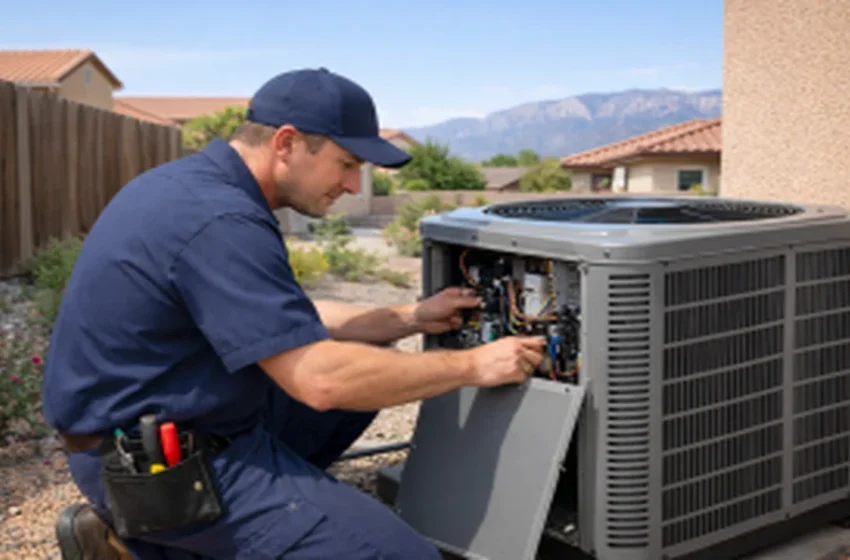
Every November, the same thing happens in houses across the East Mountains. Windows get sealed. The furnace kicks on. And within two weeks someone in the family wakes up with a scratchy throat and a nose that feels like sandpaper.
Most people blame the furnace. The furnace is usually innocent. What’s actually happening is that you’ve closed a leaky box, turned on a machine that pulls in outside air, and trapped every particle your carpet, pets, and ductwork have been collecting since spring.
Here’s the good news. You don’t need a lab or a home inspection to figure this out. You need to know which three or four things actually move the needle, and which ones are money pits. Homeowners around here who call for air purification and filtration services in NM usually discover the same handful of culprits, and most of them trace back to a short list you can check yourself.
Winter Air in New Mexico Is a Different Animal
Albuquerque gets about 300 sunny days a year, and its average humidity sits well below what most of the country deals with. According to climate data published by the U.S. Department of Energy, indoor relative humidity in the 30 to 50 percent range is where most homes perform best, and desert homes in winter routinely drop under 20 percent.
That matters because dry air changes how your house behaves. Static builds up. Wood floors and door frames shrink and gap. And your sinuses, which rely on a moist mucus layer to trap particles, stop doing their job as well.
So the stuffy feeling you get in January isn’t one problem. It’s three stacked on top of each other: dry air, sealed-up ventilation, and a dust load that never gets flushed out.
I’d rather fix the dust source than run three humidifiers all winter. Most people do it backwards.
Three things that actually change your indoor air
- Return air filtration. A cheap fiberglass filter with a high MERV rating sounds smart, but it can strangle airflow on a residential blower. Medium MERV, changed on schedule, beats high MERV changed twice a year.
- Source control. Cooking, candles, fireplaces, and off-gassing furniture contribute more indoor particulate than most people assume. Vent the range hood every time you cook, not just when something smokes.
- Humidity control. A whole-home humidifier tied to your furnace beats four portable units fighting each other.
Notice what’s missing from that list. Ozone generators, “air ionizers” that produce trace ozone, and plug-in gadgets that claim to sanitize a whole house from a wall outlet. I’ve never seen one of those fix a duct problem.
What Do UV Lights Really Do?
UV air sanitizers show up in almost every air quality service menu, including the one on Daniels HVAC’s site, so it’s worth being honest about what they can and can’t do.
Ultraviolet light at the right wavelength and dwell time can deactivate certain microorganisms on surfaces and in moving air. That’s a real, documented phenomenon studied by the Environmental Protection Agency in the context of indoor air and surface disinfection. What UV does poorly is handle dust, pollen, pet dander, and smoke. Those aren’t alive. Light doesn’t care about them.
So if your complaint is “the house smells stale and my allergies flare up in winter,” a UV light alone will disappoint you. If your complaint is “the evaporator coil grows stuff because the pan never drains right,” UV is genuinely useful. Right tool, right job.
Ductwork: The Part Nobody Wants to Hear
Here’s my least popular opinion. In most Albuquerque homes over 15 years old, duct cleaning is not the first thing you should spend money on. Air sealing and duct repair are.
A leaky return duct in an unconditioned attic pulls in whatever is up there, which in this climate means insulation fibers, dust, and the occasional visitor. Cleaning a duct system without sealing it first is like mopping a floor with the door open during a dust storm.
The National Institute of Standards and Technology has done measurement work on how duct leakage affects delivered airflow and system performance over the life of a home, and the short version is that leakage degrades performance quietly and continuously. You won’t notice it week to week. You’ll notice it in your utility bill and in how long your system runs.
Get the ducts sealed and the returns tightened, then clean. In that order.
A Practical Winter Air Checklist
Run through this in a single Saturday. It’ll take you maybe two hours, and it costs close to nothing.
- Pull your filter and hold it up to a light. If you can’t see light through it, that’s your problem right there.
- Write the filter size on a piece of tape stuck inside the return grille. You’ll never guess wrong at the hardware store again.
- Turn on every exhaust fan in the house, then hold a tissue to the grille. If the tissue doesn’t pull, the fan is moving less air than it should.
- Check the condensate pan and the drain line on your furnace or air handler. Standing water is a mold factory.
- Look at your attic ducts with a flashlight. Anything that looks like crushed foil or has visible tears needs attention.
- Pick up a cheap hygrometer. If your indoor humidity reads under 25 percent all winter, add humidity on purpose.
What about humidifiers, dehumidifiers, and thermostats?
Humidifiers earn their keep in a desert winter. Dehumidifiers rarely do here, unless you’ve got a crawlspace or basement issue. And a thermostat with a fan circulation setting is quietly one of the best air quality tools you already own, because running the blower a few minutes an hour keeps air moving through your filter instead of letting it sit.
Set the fan to circulate for 15 minutes per hour and you’ll notice the difference within a week. That’s a free change.
Where to Spend and Where to Skip
If I were ranking these by return on investment for a typical Albuquerque house, I’d put duct sealing first, filtration and humidity control second, and duct cleaning third. UV sanitizing sits behind all three unless you have a specific moisture problem at the coil.
The trap is buying the fanciest thing on the menu. Air quality isn’t a product you install once. It’s a balance you maintain, the same way you maintain your car. Nobody fixes a rough-running engine by buying better gasoline.
Give the checklist a shot first. Then, if the stuffiness sticks around after you’ve sealed, filtered, and humidified, it’s worth having someone look at the whole system rather than guessing at parts. What’s the one room in your house that always feels worse than the rest? That’s usually where the answer is hiding.
