Why Your Team’s Best Brainstorms Happen Far From the Office
- Business
Clare Louise
- 0
- 10 minutes read
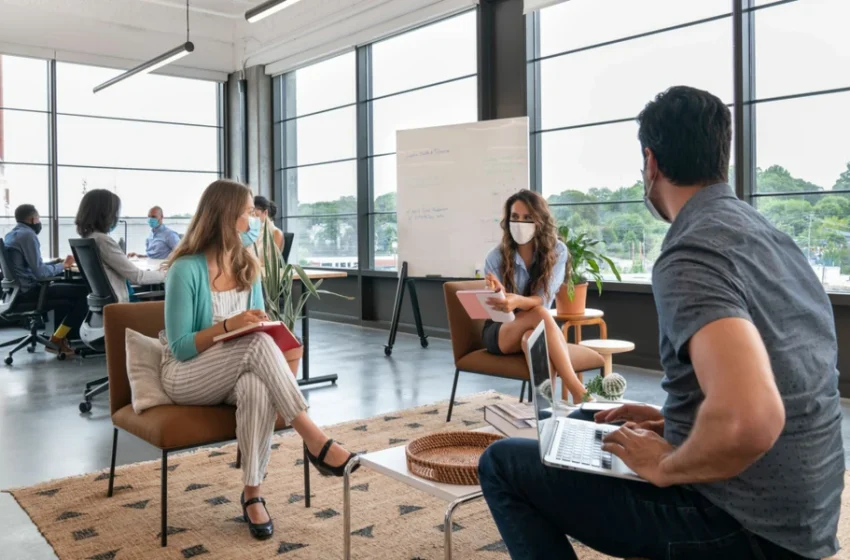
Every team has a meeting that changed things. A decision that unstuck a six-month impasse, a campaign concept that actually shipped, a strategy that the whole group bought into without a single follow-up email. Ask people where that meeting happened, and almost nobody says “the usual conference room on the third floor.”
There’s a reason for that, and it’s not a coincidence or nostalgia. The environment where your team meets shapes what they’re capable of thinking. Change the room, and you change the output. Get far enough away from the office, and you might be surprised how different the thinking gets.
The In-Person Gap Nobody Talks About
Remote and hybrid work solved a lot of logistical problems. But it quietly created a different one: the meeting experience got flatter. Video calls removed the ambient cues, the hallway conversations, the physical energy that signals to everyone that something important is happening today.
A survey conducted by Cvent in partnership with The Harris Poll found that over three in four business leaders, specifically 78%, say that in-person or face-to-face meetings are “absolutely necessary” or “very important” within their companies. That’s not a generational preference or a nostalgia play. Nearly nine in 10 business leaders agree that internal meetings are an important part of the future workplace , even as remote and hybrid arrangements expand. The data from Cvent’s 2024 U.S. Internal Meetings Impact Report, conducted with The Harris Poll, makes the case clearly: face-to-face contact isn’t something you do when it’s convenient. It’s the format that moves things.
So the question isn’t really “should we meet in person?” Most leaders already know the answer. The better question is where.
What the Office Is Actually Doing to Your Brain
Your regular workplace is optimized for routine. The familiar hallways, the same desk, the same Slack notifications bleeding into the same Teams pings. That familiarity is efficient, and it’s also creatively deadening for the kind of thinking that quarterly planning or product strategy actually requires.
Cognitive scientists have a name for this: directed attention fatigue. Your focused, effortful thinking draws on a finite resource, and by the third hour in a familiar conference room, most of it is spent. Natural settings restore directed attention in a way that fluorescent ceilings simply don’t.
There is substantial evidence that contact with nature is related to positive health and well-being outcomes, and some organizations are redesigning workspaces and adopting nature-related policies based on this research. A peer-reviewed study published on PubMed (NIH) examined associations between natural environments, time spent outside, and work-related outcomes including job engagement and creativity across a sample of 803 working adults, finding that job engagement and creativity are positively associated with employee job performance and provide a competitive advantage to organizations. The mechanism matters here: nature doesn’t just make people feel good. It gives their prefrontal cortex a break so it can do harder work when you ask it to.
Getting your team out of the office and into a new environment is one of the biggest benefits of a retreat. The right setting can spark creativity and fresh perspectives. That’s not motivational-poster language. It’s neuroscience showing up in your agenda.
The 3-Room Rule for Planning a Productive Offsite
Here’s a framework worth keeping. When you’re vetting an offsite venue, you need three distinct room types to be successful. Most planners only think about one.
Room One: The Work Room. This is your primary meeting space, the one with the A/V, the whiteboards, the seating arrangement you’ve actually thought through. It has to be distraction-free and purpose-built for structured sessions. No restaurant ambiance, no bar noise bleeding in.
Room Two: The Decompression Room. This is outdoor space, a terrace, a lawn, a beach. It’s where people wander between sessions and where the most surprising conversations happen. You can’t schedule it, but you need to guarantee access to it. This is the room that does the cognitive restoration that makes Room One productive again after lunch.
Room Three: The After-Hours Room. Dinner, casual drinks, group activities. The place where colleagues stop performing their job titles and start being actual humans to each other. Relationship-building in this room is what makes the decisions in Room One stick, because people trust the people they’ve seen outside of work mode.
A venue that gives you all three is rare. A beachfront resort that gives you all three under one roof is genuinely valuable. That’s the calculus behind booking a dedicated conference room rental at a coastal property instead of just renting a downtown hotel ballroom. The decompression room is right outside, and the after-hours room looks like the ocean at sunset.
What to Actually Put in Your Offsite Agenda
Most offsite agendas fail because they try to replicate the regular workday in a nicer location. Same back-to-back blocks. Same slide-heavy presentations. Just with better snacks. That approach wastes the location entirely.
A better structure builds in variation by design:
- Open with something that requires no slide deck. A facilitated discussion, a shared reflection, a problem statement the group defines together rather than one the leader presents.
- Schedule your hardest strategic sessions in the morning, when directed attention is freshest. Save reporting and updates for after lunch, when brains need lower-stakes tasks anyway.
- Build at least 90 minutes of unstructured outdoor time into the day. Not as a break. As a deliverable. Research has shown that spending time in nature can improve memory and attention by as much as 20% , according to analysis cited by Surf Synergy’s 2026 corporate retreat guide. That’s not a rounding error on your afternoon productivity.
- End the day with a structured reflection, not another brainstorm. Ask what each person is committing to before the next check-in. Decisions made offsite evaporate quickly if there’s no accountability mechanism attached.
How to Choose the Right Location
Location selection is where most planners spend too little time and then compensate by spending too much money on catering. A few filters that actually matter:
| Factor | What to Look For | Red Flag |
|---|---|---|
| Meeting space quality | Dedicated A/V, flexible seating, high-speed internet | Repurposed ballroom with banquet chairs |
| Access to nature | Walkable outdoor space, water views, beach or trail access | Urban property with a rooftop and no shade |
| Accommodation proximity | Attendees sleep on-site or a short walk away | 30-minute bus rides between venue and hotel |
| Catering flexibility | On-site dining for group meals, private event options | Off-site catering with coordinated logistics |
| Logistics simplicity | One venue handles meeting, meals, and lodging | Three different vendors you’re managing simultaneously |
Venue consolidation is underrated. Every additional vendor in your event is a coordination failure waiting to happen. The simpler your logistics, the more of your mental bandwidth stays on the actual content of the meeting.
“When your team is immersed in a natural setting while enjoying a professional, distraction-free environment, you create optimal conditions for productive collaboration.” – Mike Patterson, Conference Manager, The Virden Retreat Center, as cited by the University of Delaware Conference Services, 2025
That quote holds up in practice. The teams that walk away from an offsite with real commitments are almost always the ones whose venue removed every excuse not to focus.
The Real ROI of Getting Out of the Office
Offsite meetings carry a real cost: travel, lodging, lost seat time. Leaders rightly want to justify that spend. But the math gets more interesting when you consider what bad meeting culture costs on the other side. Routine meetings that produce no clear decisions, deferred strategic conversations, team misalignment that compounds across quarters. Those costs are invisible because they don’t show up on an invoice.
An offsite that produces one real strategic decision, resets a fractured team dynamic, or finally gets alignment on a direction the company’s been circling for six months pays for itself many times over. You just have to actually design it to do those things, and choose a venue that makes the design possible.
The best offsite isn’t the fanciest one. It’s the one where the environment does part of the work for you. That’s the whole bet.
